
Calzoni are a quite common Italian dish, consisting of “pouches” of pizza dough stuffed with various ingredients, ranging from cheese or meat all the way to vegetables. I would say they are slightly less common to find in restaurants than pizza, but they are definitely a widespread popular dish. Funnily enough, the word “Calzone” (singular) in Italian simply translates as “trousers”, which is quite different from what you would expect!
Growing up, every now and then we made calzoni as an alternative to pizza at home. Not only they always taste amazing, they also are a really versatile dish, as everyone can stuff them with their choice of ingredients! Calzoni is also one of these dishes that works quite well if you like to meal prep! Whenever we make them, we always make more than we can eat, then divide the leftovers in portions and freeze them. I then just take a portion out of the freezer in the morning when I go to my office and warm it up when I go on lunch break! They are still a delightful meal even after freezing, and they always prompt people to ask questions about them!
Ingredients
grams of flour
ml of warm Water (25-30C)
ml of Extra Virgin Olive Oil
grams of Salt
grams of fresh yeast
your stuffings of choice
Ingredients
lb(s) of flour
tbsp of Extra Virgin Olive Oil
cups of warm Water (~80F)
tbsp of Salt
tbsp of fresh yeast
your stuffings of choice
As a point of reference, with a scale of 1 in the recipe above you can comfortably feed 3-4 people, but you won’t have a lot of leftovers! I usually do double that amount (so, choosing a scale of 2 in the selector above), so that I have leftovers for the following days that I can take with me to work!
Calzoni Recipe
With its main ingredients being flour, water, salt, yeast and olive oil, the dough is quite cheap to make! Besides the base ingredients, you can choose stuff your calzoni with it with anything you like!
I like to use fresh yeast, as opposed to the dried one. I think it’s easier to measure and personally I like its smell more! After all, it’s what we have been using at home for as long as I can remember and it really brings back memories! Don’t let me bias you, though, dried yeast works too just as fine! If you prefer to use that you should convert the amount of fresh yeast I indicated to the corresponding amount of dried yeast. Producers usually indicate the equivalence in the back of the package.
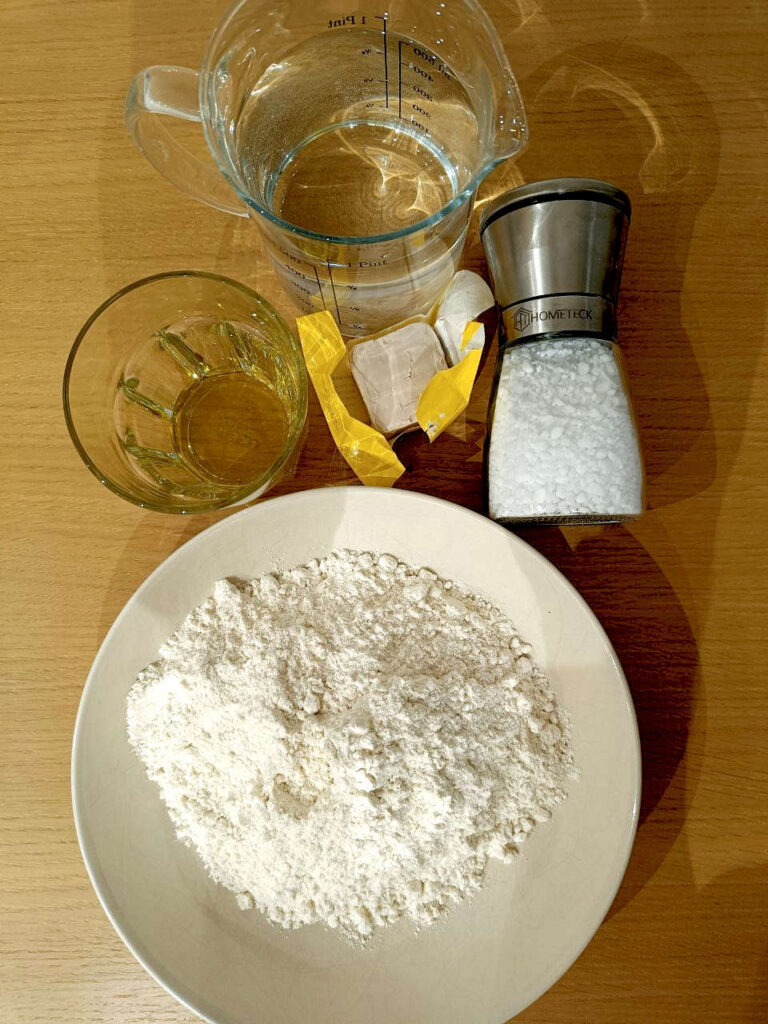
You might notice that the recipe for the dough is pretty much the same as the one we would use for Pizza, and you would be right! They are, indeed, the same, and the main difference will be how we use the dough later on!
Stuffing
Besides the ingredients for the dough, you are free to stuff them with anything that you like. Really, anything that suits your taste will work! Here are some of my favorite combinations that I routinely use, if you want to get some inspiration:
- Buffalo Mozzarella and ham (or other meat of choice);
- Brie (cheese) and Speck (Italian/German/Austrian cured meat);
- Zucchini or spinach, with optionally some cheese (but really, they’re also great on their own);
- Gorgonzola cheese (yes, alone, Gorgonzola is very tasty);
- Mortadella (Italian cured meat), Buffalo Mozzarella and crumbled pistachio.
Did you know?
Humanity did not fully understand yeast and how it works until quite recently. We have, however, been using it since thousands of years ago! At the very beginning, we even believed it was magic! If you want to learn more about it, check this dedicated post!

Choice of flour
I recommend choosing a wheat flour with a medium/high protein content (for example: bread flour or “Type 00“) for this, as it will greatly help your dough’s strength and contribute to getting an airy and soft dough as a result.
Most of the time that goes into making Calzoni is spent waiting for the dough to rise, and you should choose the amount of yeast you will use based on when you are able to make the dough and when you will cook it! I often make the dough in the morning, so I can let it rise for 8-12 hours throughout the day then bake it in the evening. I included a leavening time selector in the ingredient list for convenience!
Step 1: Making the dough
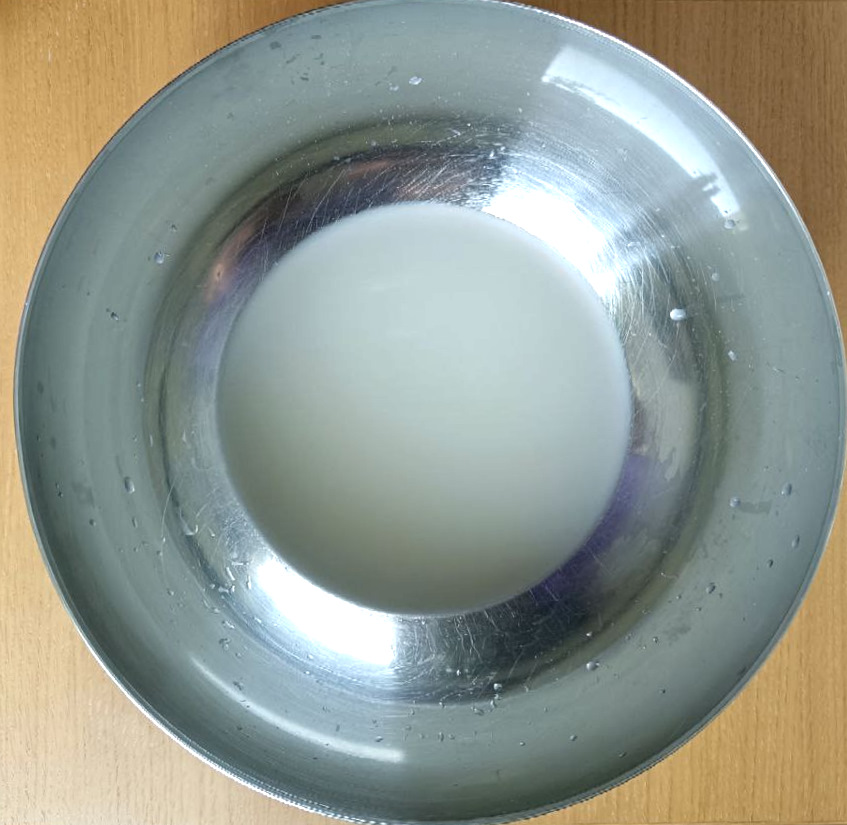
In a bowl, add about 2/3 of the water and the yeast. Mix it gently (with your hands or a fork) until the yeast dissolves in water. It will look like murky water at this point, but don’t worry, it’s how it’s supposed to look!
Now, add in most of the flour (just save a small amount for later) and mix until the water has been all absorbed. If at this point it looks too dry, don’t worry, this is intended and we will fix it soon. We are doing this so that we avoid adding the salt in the same water as the yeast. Salt effectively kills the yeast if it comes into direct contact with it, so much so that it can be called an inhibitor. By using this two-step process, we can have more control on its action and more reliable leavening times.
Mixing Technique!
You can choose to mix the dough using a fork or your hands. Either way, your movement should be one where you lift one side of the dough and fold it onto itself. It’s important to not apply too much force and not overstretch the dough, or it will become gummy and harder to work with.
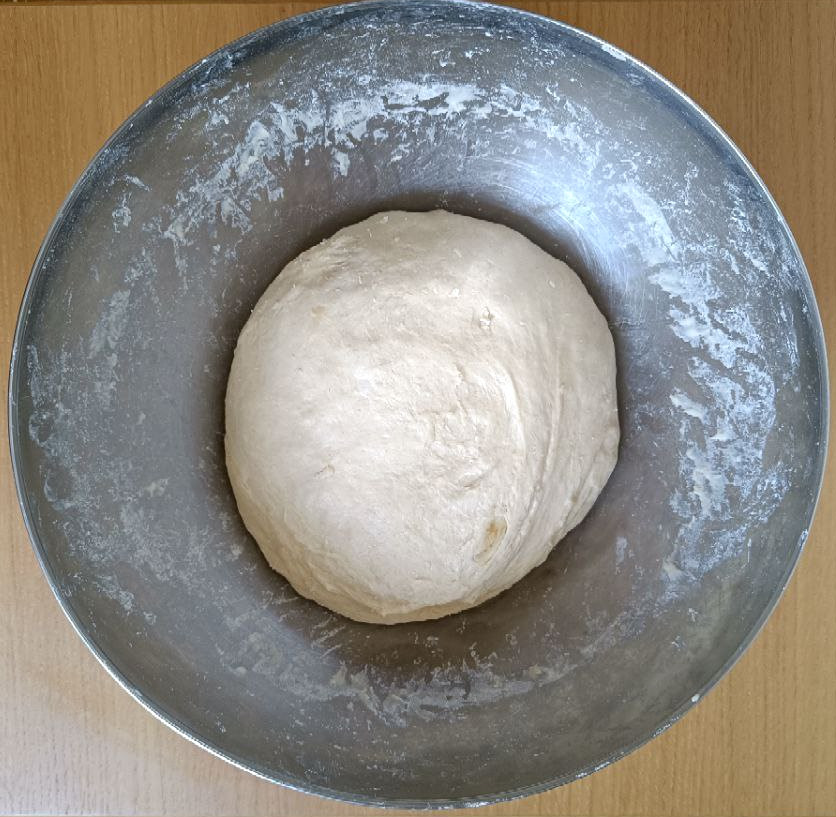
You can add the salt to the water we left out earlier and mix until it’s all dissolved. Then, you can add the salty water, the remaining flour and the olive oil to the bowl and keep mixing until the dough becomes smooth and uniform in consistency. The dough should be smooth and it should hold together in a nice ball shape. If it doesn’t hold together (and it looks too wet), then it’s fine to add a little bit of extra flour to it. Different flours have different gluten and protein content, so small adjustments to the recipe may be required to attain the right consistency. You can use the image below as a reference!
Tip!
To avoid the dough from sticking a lot to the sides of the bowl, you can put a little bit of olive oil on a napkin and use it to oil the sides of the bowl. This will make the next steps easier and the bowl easier to clean later on!
(Optional) Step 2: Stretch and folds
This is an optional step, but doing this can contribute a lot to strengthening gluten bonds in your dough. This will make it able to retain air bubbles better, allowing it to rise more and making your dough easier to work with later, as well as more airy and soft. After 30 minutes since you set the dough to rest, you can perform the first set of stretch and folds.
How to perform a Stretch and Fold
To perform a stretch and fold, you can:
- Fill a small bowl with water and wet your fingers. This will prevent the dough from sticking to your hands;
- Lift the dough from one side and gently fold it onto itself (all the way to the other side);
- Repeat for different sides of the dough, up to 4-8 folds in total.
As you do the folds, you will notice that your dough will start feeling harder to the touch. This is normal, it will soften up again as we let it rest. On the flip side, your dough will also look pleasantly smoother after some stretch and folds.
How to perform a Stretch and Fold
Repeat this process every 30 minutes for 1 to 2 hours (up to 4 sets of stretch and folds in total). After this is done, just let your dough rest until the end of the first rise. The time it takes will depend on the amount of yeast you have used. If you used the leavening time selector above, you can refer to that, otherwise you can keep an eye on the dough and consider the first rise done when the dough has more than doubled or tripled in size.
Upon completing its first rise, your dough will look like in the picture below:
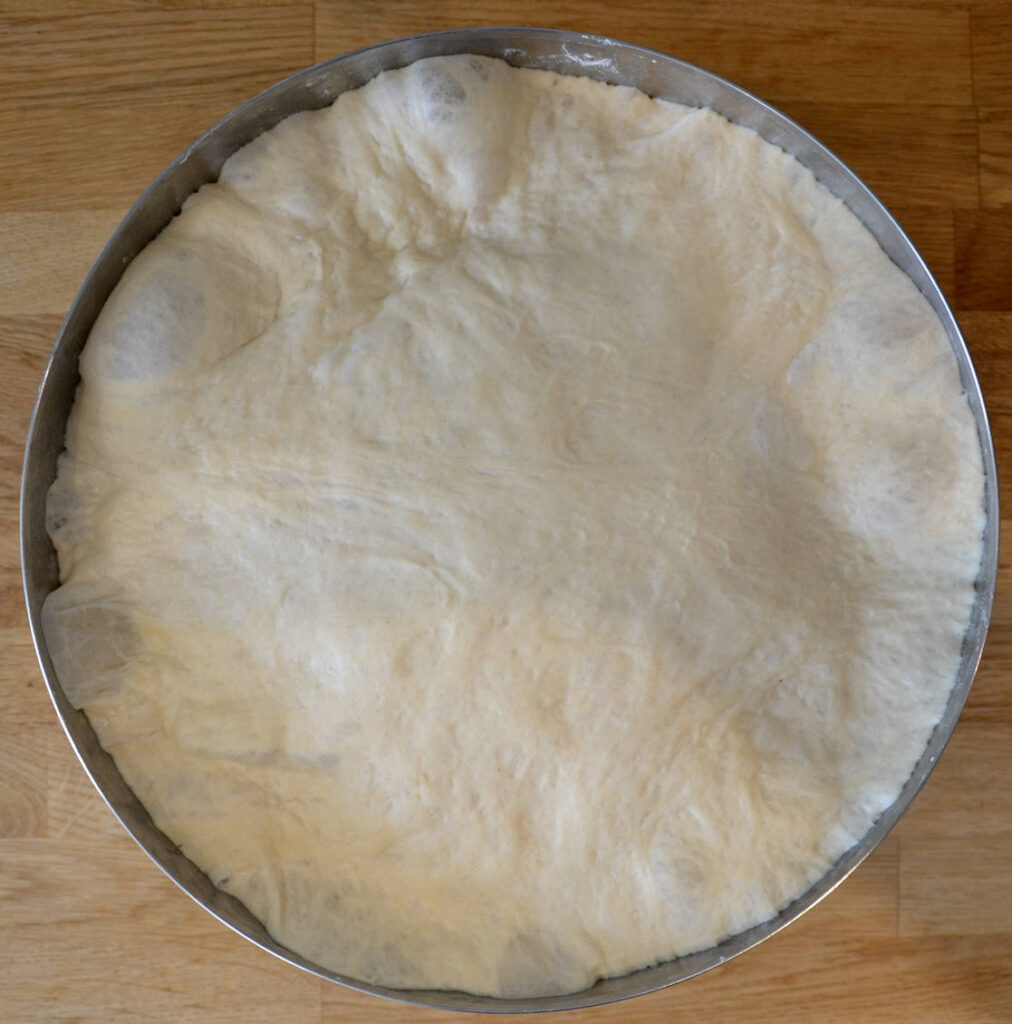
If you read our Focaccia recipe, you will notice that this looks slightly less wet and sticky. This is due to the slightly reduced water content; the difference in quantity is actually not so large, but it has a visible effect on the result!
Step 3: Preparing the Calzoni
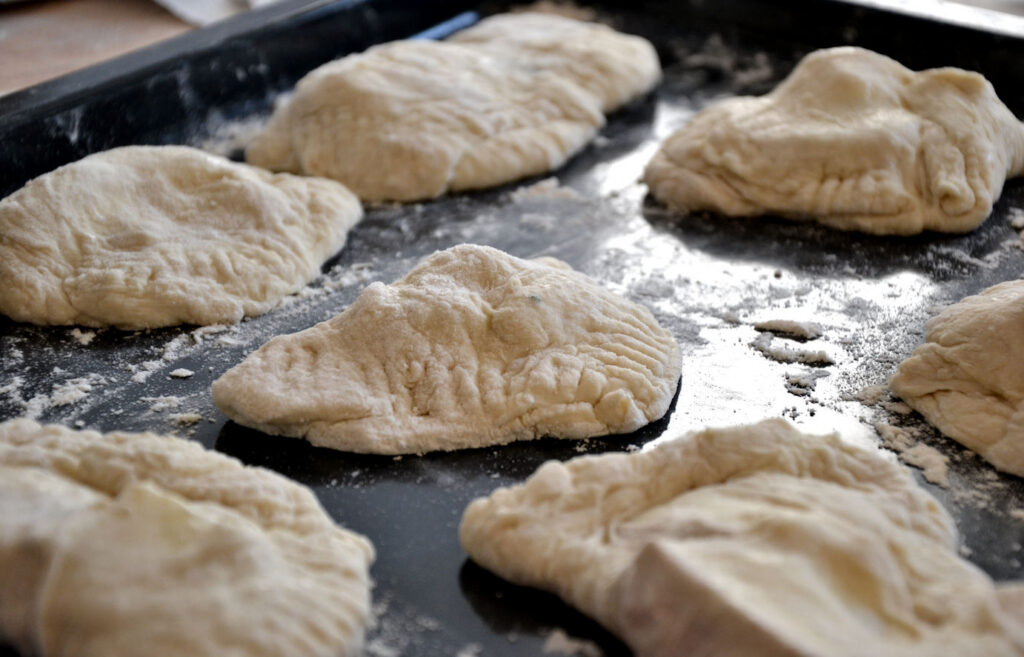
Your dough has now completed its rise. You can get the sheet pans you will use for baking and add a little bit of flour to them, spreading it across uniformly. Spread some flour also on another flat surface, which could be the table directly or a cutting board, and let’s get going! Get your dough out of the bowl and divide it in smaller chunks.
Flatten the dough
One at a time, you’ll need to flatten each chunk. For this, you can use your hands to gently stretch each piece of dough or a rolling pin. If you do use a rolling pin, don’t put too much pressure on the dough, or you’ll risk releasing a lot of the air bubbles we worked so hard to keep inside the dough!
Stuff the Calzoni
Cut the flattened dough to pieces; you can decide the size, depending on whether you want to make few large Calzoni or several small ones. I usually opt for making several small ones, as it allows for having more variety with their content, but this is up to you! Today, these are combinations I decided in my Calzoni:
- Gorgonzola (cheese) or Burrata and cooked ham;
- Brie (cheese) and ham.
To make them, add the contents on one side of the flat piece of dough and then fold the other side over it. You can use the prongs of a fork to seal them well by gently pressing the two sides together.
Step 4: Baking
Preheat your oven (static, not ventilated) to 220C-250C (428F-482F). Once it has reached the set temperature, you can put the calzoni in! They will be ready when golden brown on both sides, which should take 15-20 minutes, but do keep an eye on them along the way!
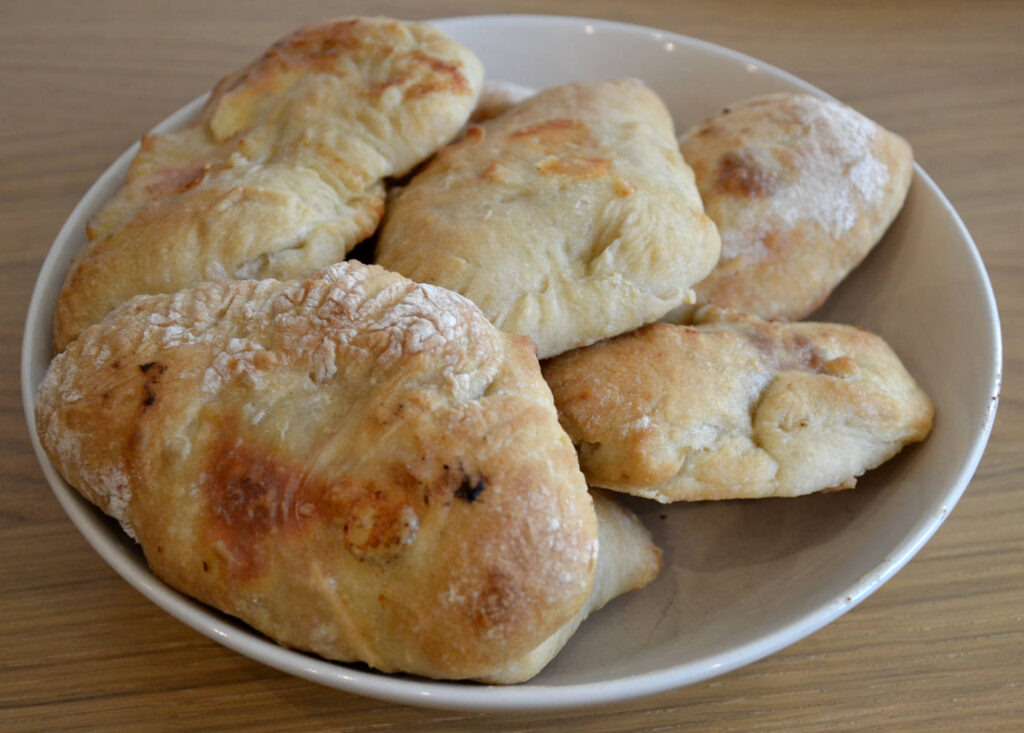

Congratulations, we are done! Serve, enjoy and make sure to brag about your delicious creations!
Try out more recipes!
Why not try out other fun similar recipes? Check out these other posts:

Fluffy Pizza Dough & Homemade Pizza
Saying that Pizza is a staple of Italian Cuisine is an understatement. It’s definitely one of the traditional Italian dishes that is most known and popular also in other parts of the world. At its core, it’s a simple dish, but it’s one that can be endlessly reinvented with flavors and toppings. As I grew…

Focaccia
When I was a kid, we ate Focaccia quite often. Whether this was homemade or bought from our local bakery, it was always a treat! As this is a kind of bread, you can eat this pretty much however you like it! Want to stuff it with some nice Salame? It works! How about some…




Leave a Reply